ENROLLMENT ENDS:
October 27, 2026 Tuition: $897 *Payment Plans Available
WINTER COHORT BEGINS:
Eight-Week Course November 4, 2026 November 11, 2026 November 18, 2026 December 2, 2026 December 9, 2026 December 16, 2026 January 6, 2027 January 13, 2027
MORNING SCHEDULE:
Wednesday Daytime 9:00am - 10:30am
About the course
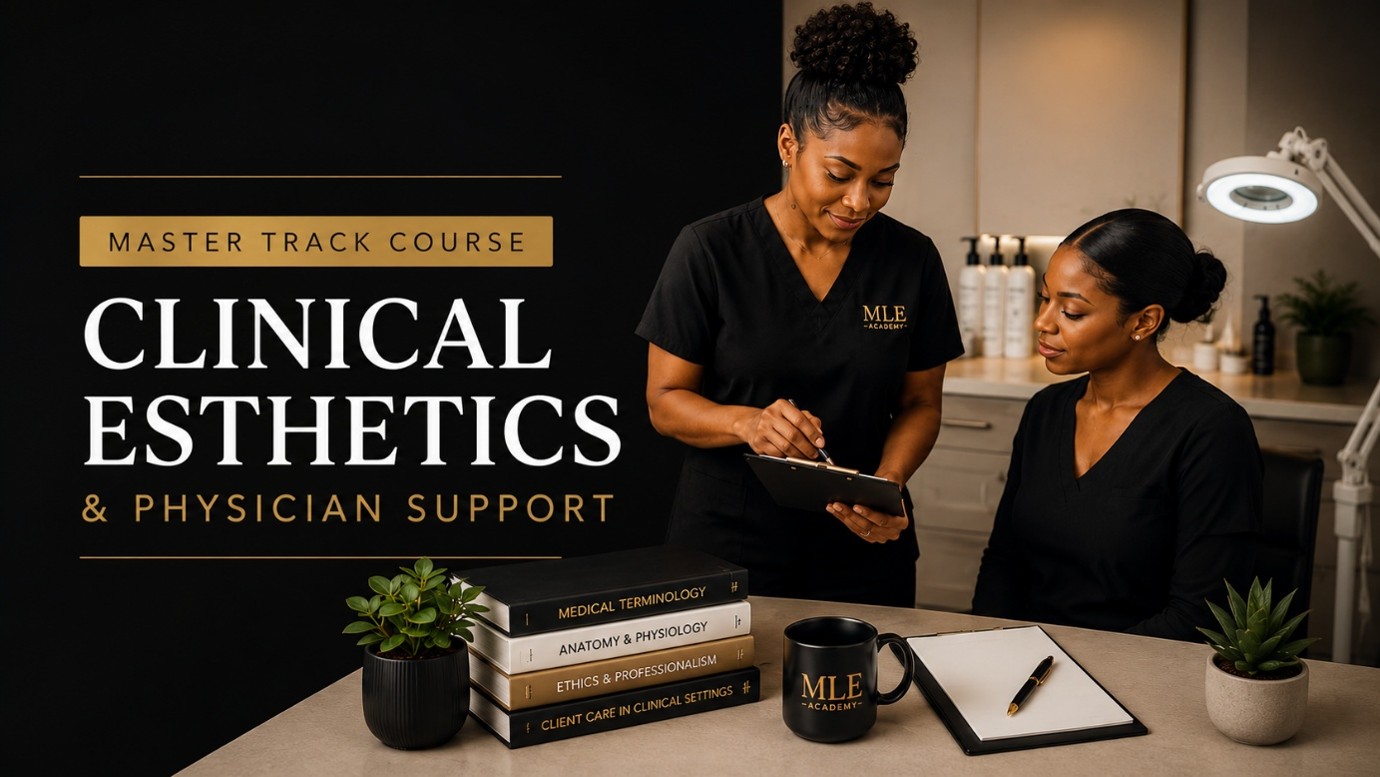
Clinical Aesthetics and Physician Support Continuing education: NCEA-approved continuing education, 10 CEs Estimated learning time: 12 hours of live instruction over 8 weeks Course format: Live Master Track, 90 minutes per week Kit: Not required About the course This course explores how esthetic professionals support clients before, during, or after physician-directed care. Through live weekly sessions, you’ll consider clinical procedures, client presentation, and treatment-related factors that may affect esthetic services. You’ll also examine appropriate service modifications, documentation, referrals, and communication with other professionals while maintaining your scope of practice. What you will learn 1. Describe the role of the esthetic professional within clinical aesthetics and physician-supported care, including appropriate collaboration, communication, and professional boundaries. 2. Identify clinical aesthetic procedures, treatment considerations, and client factors that may affect esthetic services provided before, during, or following physician-directed care. 3. Evaluate client presentation and treatment-related considerations to determine appropriate esthetic support, modifications, precautions, contraindications, and referral needs within the practitioner’s scope of practice. 4. Apply interdisciplinary communication, clinical observation, documentation, and critical-thinking skills to support safe, ethical, and coordinated client care in physician-supported aesthetic settings.

Meet Your Instructor
Ms. Lakeisha is a master esthetician, educator, and wellness professional with over 18 years of experience in clinical skincare, natural ingredients, and treatment planning. Her teaching style blends science, strategy, and practical application to help estheticians build confidence, strengthen decision-making, and deliver safer, more effective treatments. In this training, she helps students sharpen their observation skills, refine their clinical thinking, and recognize common skin analysis mistakes that can affect treatment outcomes.